
Imagine effortlessly slicing through a ripe tomato, its skin parting with a whisper, or dicing vegetables with precision and speed. This is the magic of a truly great Japanese cleaver knife. But if you’ve ever stood overwhelmed in a kitchen store or scrolled endlessly online, you know that finding that perfect tool can feel like a quest.
Choosing a Japanese cleaver isn’t just about picking a sharp blade; it’s about finding a partner in your culinary adventures. So many types exist, and it’s easy to get lost in the jargon. You want a knife that feels balanced in your hand, cuts cleanly, and lasts for years. But how do you know which one is right for *you*? What makes one cleaver better than another?
By the end of this post, you’ll understand the secrets behind these amazing knives. We’ll break down what makes a Japanese cleaver special, what to look for when you’re shopping, and how to care for your new kitchen essential. Get ready to discover the perfect Japanese cleaver that will transform your cooking!
Our Top 5 Japanese Cleaver Knife Recommendations at a Glance
Top 5 Japanese Cleaver Knife Detailed Reviews
1. PAUDIN Nakiri Knife – 7″ Razor Sharp Meat Cleaver and Vegetable Kitchen Knife

Rating: 8.8/10
Meet the PAUDIN Nakiri Knife, a 7-inch powerhouse designed for your kitchen. This knife is a true all-rounder, ready to tackle slicing, dicing, chopping, and mincing with ease. It’s built with high-carbon stainless steel, making it tough and sharp for all your cooking needs. The comfortable, ergonomic handle makes it a joy to use, even for extended prep work. Plus, its unique wave pattern adds a touch of elegance while helping food slide right off.
What We Like:
- It’s a true all-purpose knife, perfect for many kitchen tasks.
- The blade is ultra-sharp and made from durable 5Cr15Mov stainless steel.
- The ergonomic pakkawood handle offers a comfortable and secure grip.
- The attractive wave pattern looks great and helps prevent food from sticking.
- It comes in beautiful packaging, making it an excellent gift idea.
- It’s easy to re-sharpen, clean, and maintain.
What Could Be Improved:
- While the wave pattern is beautiful, it’s noted as not being real Damascus steel.
The PAUDIN Nakiri Knife is a fantastic addition to any home kitchen, offering both performance and style. It’s a reliable tool that makes food preparation easier and more enjoyable.
2. HOSHANHO Cleaver Knife 7 Inch

Rating: 9.4/10
The HOSHANHO Cleaver Knife 7 Inch is a versatile kitchen tool designed for both home cooks and professional chefs. This knife aims to make food preparation easier and more efficient with its sharp blade and durable construction.
What We Like:
- The blade is super sharp, with a 15° angle on each side for clean cuts. It’s also very strong and lasts a long time.
- It’s made from special Japanese steel that stays sharp even after lots of use. This steel also makes the knife tough and resistant to breaking.
- The handle is designed to be comfortable and easy to hold, which helps you cut with more control and less effort.
- This knife can handle many kitchen tasks, like cutting fish, chicken, and vegetables. It’s a great all-around tool for any kitchen.
- Cleaning is easy because the blade has a smooth finish that prevents food from sticking.
What Could Be Improved:
- The instructions recommend hand washing only. This might be a bit inconvenient for some users.
- Regular sharpening is needed to keep it in top shape.
Overall, the HOSHANHO Cleaver Knife is a strong contender for anyone looking for a reliable and sharp kitchen knife. It offers excellent performance for a variety of cutting tasks.
3. imarku Cleaver Knife 7 Inch Meat Cleaver – SUS440A Japan High Carbon Stainless Steel Butcher Knife with Ergonomic Handle

Rating: 9.3/10
The imarku Cleaver Knife 7 Inch Meat Cleaver is a versatile kitchen tool that can handle many tasks. It’s designed for both home cooks and professional chefs. This knife makes chopping, mincing, and slicing food easy.
What We Like:
- It’s a multi-purpose cleaver that can chop, mince, slice, and bone.
- The blade is ultra-sharp and hand-sharpened by experienced artisans.
- It’s made from high-quality Japan SUS440A high carbon stainless steel.
- The Pakkawood handle is ergonomic for a comfortable and secure grip.
- It resists rust and corrosion, making it durable and easy to maintain.
- It comes in a luxury gift box, perfect for gifting.
- The wide blade keeps your fingers away from the cutting surface.
What Could Be Improved:
- While it’s great for many tasks, it might not be the best for very heavy-duty boning tasks compared to specialized butcher knives.
This imarku cleaver knife is a fantastic addition to any kitchen. It offers great performance and durability, making it a worthwhile investment for any cooking enthusiast.
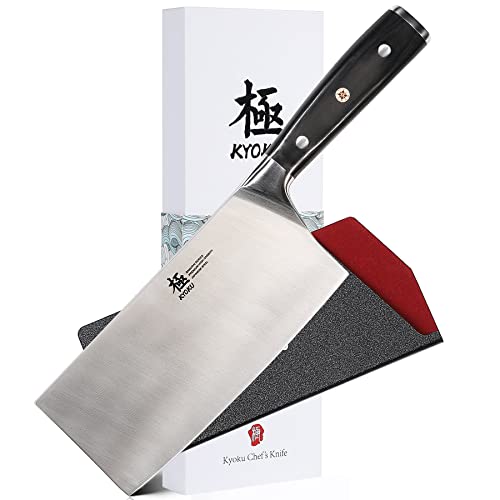
4. KYOKU Samurai Series – 7″ Cleaver Knife – Full Tang – Japanese High Carbon Steel Kitchen Knives – Pakkawood Handle with Mosaic Pin – with Sheath & Case
Rating: 9.0/10
Meet the KYOKU Samurai Series 7-inch Cleaver Knife – a powerhouse for your kitchen. This knife blends the strength of Japanese steel with a comfortable design, making chopping and slicing a breeze. It’s built to last and perform, turning everyday cooking tasks into a smoother experience.
What We Like:
- SUPERIOR STEEL: The knife uses special steel that stays sharp for a long time. It’s treated to be super hard and resist rust.
- EXTREME SHARPNESS: Crafted by experts using a traditional Japanese method, the blade is incredibly sharp. It’s sharpened to a perfect angle, making it cut through anything with ease.
- ERGONOMIC & WELL-BALANCED: The handle is shaped for comfort. It helps prevent your hand from getting tired, even when you use it a lot.
- DURABLE HANDLE: The Pakkawood handle is strong and can handle heat, cold, and water. A pretty mosaic pin adds a nice touch.
- SHEATH, CASE, & LIFETIME SUPPORT INCLUDED: You get a protective sheath and a storage case to keep the knife safe and clean. Plus, the company offers support for as long as you own the knife.
What Could Be Improved:
- While the Pakkawood handle is treated, some users might prefer a different material for a more natural feel.
- The extreme sharpness, while a pro, means extra care is needed during handling and cleaning.
This KYOKU cleaver is a fantastic tool for any home cook. It offers professional-level sharpness and durability in a comfortable package.
5. HOSHANHO 7 Inch Nakiri Knife

Rating: 9.4/10
Get ready to chop, slice, and dice like a pro with the HOSHANHO 7 Inch Nakiri Knife! This knife is designed to make your kitchen tasks easier and more enjoyable. It’s made with super sharp Japanese steel and a comfy handle, making it a great addition to any cook’s collection.
What We Like:
- Ultra Sharp Blade: The knife has a super sharp edge that makes cutting smooth and easy. It’s perfect for both delicate work and tough chopping.
- Top Grade Steel: It’s made from strong Japanese high carbon stainless steel. This steel keeps the knife sharp and like new, even after a lot of use.
- Ergonomic Handle: The handle fits nicely in your hand. It helps balance the knife and makes it comfortable to hold for a long time, so your hand won’t get tired.
- Exquisite Design: The knife looks really cool with its special scallop-shaped pits. These pits help food not stick to the blade. The wooden handle has a nice natural look that adds style to your kitchen.
- Multi-function Nakiri Knife: This knife can do it all! You can use it for vegetables, meat, and fruit. It can chop, slice, and dice, making it a truly all-around kitchen tool.
What Could Be Improved:
- The “scallop-shaped hollow pit” might be a bit tricky to clean thoroughly for some users.
- While it’s a great all-around knife, serious chefs might prefer specialized knives for very specific tasks.
This HOSHANHO Nakiri knife is a fantastic tool for home cooks. It offers a great combination of sharpness, comfort, and style for all your kitchen cutting needs.
Choosing Your Perfect Japanese Cleaver Knife
What Makes a Great Japanese Cleaver?
A Japanese cleaver knife is a fantastic kitchen tool. It’s not just for chopping meat. You can use it for vegetables, herbs, and even some tougher ingredients. Picking the right one makes cooking easier and more enjoyable. Let’s explore what to look for.
Key Features to Look For
Blade Shape and Size
- Nakiri: This cleaver has a straight, rectangular blade. It’s perfect for chopping vegetables. It cuts straight down, making clean slices.
- Chukabocho (Chinese Cleaver): This is a wider, thinner cleaver. It’s very versatile. You can chop, slice, and even scoop food with it.
- Size Matters: Cleavers come in different lengths. A longer blade is good for bigger tasks. A shorter one is better for delicate work.
Blade Thickness and Weight
A good cleaver feels balanced in your hand. It shouldn’t be too heavy or too light. A thinner blade cuts through food more easily. A thicker blade is better for harder ingredients.
Handle Comfort
The handle is important for a good grip. Look for materials like wood or a comfortable synthetic. A well-designed handle prevents slipping. It makes long chopping sessions easier.
Important Materials
Steel Type
- High-Carbon Stainless Steel: This is a popular choice. It’s strong and stays sharp. It also resists rust.
- Carbon Steel: This steel gets very sharp. It’s durable. However, it can rust if not cared for properly. It needs oiling.
- Damascus Steel: This steel has a beautiful pattern. It’s made by layering different steels. It’s known for its sharpness and strength.
Handle Materials
- Wood: Many traditional Japanese cleavers have wooden handles. They offer a classic look and feel.
- Composite Materials: These are often made from durable plastics or resins. They provide a good grip and are easy to clean.
Factors That Improve or Reduce Quality
What Makes a Cleaver Better?
- Sharpness: A sharp blade cuts cleanly. It requires less force.
- Edge Retention: This means how long the blade stays sharp. Better steel holds an edge longer.
- Balance: A well-balanced cleaver feels good in your hand. It makes chopping safer and more efficient.
- Construction: A full-tang knife (where the metal of the blade goes all the way through the handle) is usually stronger.
What Can Make a Cleaver Worse?
- Poor Steel: Cheap steel dulls quickly. It can also chip easily.
- Bad Balance: An unbalanced knife is hard to control. It can lead to accidents.
- Weak Handle: A handle that feels loose or is made of cheap material can break. It’s also uncomfortable to use.
- Rust: If the steel isn’t properly treated or cared for, it can rust. This ruins the knife.
User Experience and Use Cases
Who Needs a Japanese Cleaver?
Anyone who cooks regularly can benefit from a good cleaver. If you chop a lot of vegetables, a Nakiri is ideal. If you need a do-it-all knife, a Chukabocho is a great choice.
Everyday Cooking
You can use a Japanese cleaver for everyday tasks like slicing onions, dicing carrots, and mincing garlic. It makes prep work much faster.
Tougher Jobs
Some cleavers can handle tougher jobs. You can use them to chop through small bones or tough root vegetables. Always check the knife’s specifications. Don’t force a delicate cleaver.
Maintenance is Key
To keep your cleaver in top shape, wash it by hand after each use. Dry it thoroughly. Oil carbon steel blades regularly. Sharpen your cleaver when it starts to feel dull. Proper care ensures your knife lasts for years.
Frequently Asked Questions (FAQ) About Japanese Cleaver Knives
Q1: What is the main difference between a Nakiri and a Chukabocho?
A1: A Nakiri has a straight, rectangular blade perfect for vegetables. A Chukabocho is wider and thinner, good for many tasks like chopping, slicing, and scooping.
Q2: What kind of steel is best for a Japanese cleaver?
A2: High-carbon stainless steel is a good choice because it’s strong, sharp, and resists rust. Carbon steel gets very sharp but needs more care to prevent rust.
Q3: How do I know if a cleaver is well-balanced?
A3: A well-balanced cleaver feels comfortable and stable in your hand. It shouldn’t feel like the blade is too heavy or the handle is too light.
Q4: Can I use a Japanese cleaver to chop bones?
A4: Some heavier cleavers can handle small bones. However, most Japanese cleavers are designed for slicing and chopping, not heavy-duty bone breaking. Check the knife’s intended use.
Q5: How should I clean my Japanese cleaver?
A5: Always wash your cleaver by hand with warm, soapy water. Never put it in the dishwasher. Dry it immediately and completely after washing.
Q6: What does “full-tang” mean for a knife?
A6: A full-tang knife means the metal of the blade extends all the way through the handle. This makes the knife stronger and more durable.
Q7: How often do I need to sharpen a Japanese cleaver?
A7: Sharpen your cleaver when it feels dull. This depends on how often you use it and what you cut. Regular sharpening keeps it cutting efficiently.
Q8: Are Japanese cleavers difficult to use?
A8: With a little practice, Japanese cleavers are easy to use. Their design makes chopping and slicing efficient. Proper technique helps.
Q9: What are the benefits of a wooden handle?
A9: Wooden handles offer a traditional look and feel. They can be comfortable to hold. However, they may require more care than synthetic handles.
Q10: Can I use my Japanese cleaver for slicing meat?
A10: Yes, many Japanese cleavers, especially the Chukabocho style, are excellent for slicing meat. Their sharp blades create clean cuts.
In conclusion, every product has unique features and benefits. We hope this review helps you decide if it meets your needs. An informed choice ensures the best experience.
If you have any questions or feedback, please share them in the comments. Your input helps everyone. Thank you for reading.